Human beings have a penchant for naming and classifying things. Presumably, this derives from our left cerebral hemisphere’s need to bring order to the otherwise overwhelming floods of incoming data. As a personality junkie, one thing that has always interested me in this respect is where my core interests fall on the map of human knowledge. At least for certain personality types, classifying and conceptually situating one’s interests is integral to clarifying one’s identity and vocation.
If you have ever spent much time around newspapers, you’ve probably noticed that they are divided into a variety of categories—news, politics, religion, lifestyle, health, travel, sports, and so on. I’ve long wondered why my core interests are not well summarized by any of these categories. It would be one thing if this occurred in only some publications, but from what I can tell, this ostensible lack of representation is consistent throughout mainstream publishing. I suppose this should not really surprise me in light of the fact that my personality type (INTP) is less common than most types. After all, there is a reason we call these mainstream publications; they are designed to cater to the interests of the majority, not the fringe.
Jung: Forever on the Fringe
As I was pondering this issue, it wasn’t long before I was struck by the fact that Carl Jung was a perfect case study. With the possible exception of the Myers-Briggs Type Indicator®, which was derived from Jung’s work, Jung has never enjoyed widespread popularity among laypeople or academics. Thus, I think it’s safe to say that we will never see a newspaper section entitled “Jungian Studies.” But what is it about Jung that has led to his perpetual marginalization? Why have his ideas been consistently relegated to the opinion page of our societal newspaper?
Although Jung did not align himself with any particular religious tradition, one could make the case that his primary concern was essentially of a spiritual nature. In my view, the primary impetus of his work pertained to human meaning and psychospiritual vitality, or what might be well describe as matters of the soul. For this reason, modern psychologists have been quick to disassociate themselves with Jung, often dismissing him as some sort of mystic or pseudoscientist.
Jung was not merely a spiritual or existential thinker, but exhibited significant powers of rationality throughout his writings. His penchant for rational understanding impelled him to explore and conceptualize the essential structures and processes of the human mind and personality. Of course, Jung’s spiritual and rational concerns were by no means unrelated; Jung believed that understanding the structures and workings of the mind could, in the end, reveal the way to greater psychospiritual vitality.
In my view, it is Jung’s dual interest in the spiritual and psychological that has made his work harder to categorize and thus more susceptible to marginalization. Jung showed no attraction to organized religion, but also exhibited little interest in joining the academic community. One could argue that his interests were simply too broad and unbounded for him to fit squarely into a single societal group or category.
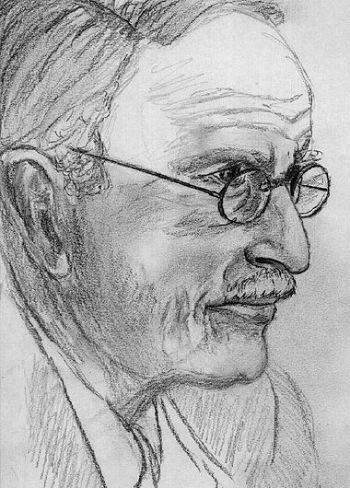 I must confess that I find myself in deep sympathy with Jung’s situation. Discussing psychological growth apart from the context of personal or spiritual meaning, as is commonly done in modern self-help books, will fail to inspire the energy required to institute such changes. In other words, if a self-help book fails to be inspirational it will ultimately prove impotent, regardless of the merits of its insights or techniques. Similarly, if a religious idea or experience lacks a tenable explanation or conceptual framework, it too will prove unsatisfying. What Jung realized, even if somewhat unwittingly, was that both the conceptual (L) and experiential / spiritual (R) sides of our brain need to be sufficiently engaged in order for positive change to occur. Thinkers such as William James, Henri Bergson, and the Paul Tillich also realized this and are similarly misunderstood.
Categorizing Jung: Student of the Self
If we were pattern a category around someone like Jung, what might we call it? Although a notion like “soul studies” captures much of the Jungian impetus, it has too many overtones of traditional religion to be a good candidate. Some might suggest that the broad concept “humanities” would work, but this seems too vague and fails to stress the importance of the individual vis-à-vis humanity as a whole. “Existentialism” is another candidate, but many existentialist writings fall short with respect to the rational component. Among the stronger candidates is “humanistic psychology,” which is known for its holistic approach to human psychology, including the recognition and acceptance of spiritual aspirations. Famous proponents of this view include Carl Rogers, Rollo May, and Abraham Maslow.
Whatever the merits of the above options, I’m most strongly drawn to a term that Jung himself employed, the Self, to represent the heart of Jung’s work. As Jung explains in his classic work, Psychological Types:
The self designates the whole range of psychic phenomena in man. It expresses the unity of the personality as a whole.
For Jung, the Self included both conscious and unconscious contents and is thus not limited to our conscious self-understanding (which is why I prefer to capitalize the term when using it in a Jungian sense). In short, Jung saw the Self as the broadest category for representing the psychology of the individual.
Like consciousness, it is difficult to get a good sense of the essential nature of the Self through quantitative or various external methods. One could utilize the full gamut of behavioral and neuroscientific approaches and end up with little understanding of what it is like to be a Self. Thus, the use of qualitative methods seems imperative if we wish to maintain any hope of understanding the essential nature of the Self. It is therefore unfortunate that those expressing interest in studying the Self qualitatively are typically not taken seriously in scientific circles. This is largely due to the fact that empirical science is founded on the belief that, for the reality of something to be substantiated, it must be consistently measurable or detectable through the senses or through technology. While one could argue that human consciousness is certainly detectable through experience, many scientists consider that type of experience or data to be less consistent, trustworthy, measurable, or testable than other sorts of experience or data. Perhaps the biggest problem with consciousness is the difficulty of subjecting it to controlled experiments. The fact that human beings are more complex and complicated than other sorts of phenomena has made human research unattractive to the type of scientist who seeks clear and certain answers.
In addition to the methodological challenges associated with studying human beings, many scientists have a natural proclivity for reductionism. In many respects, the desire to reduce and understand things in terms of their essential parts is an effective and reasonable component of the scientific enterprise. However, it may be the case that what we call mind cannot be entirely explained in terms of the brain. While it would certainly be more convenient, and perhaps even more satisfying to many scientists, if such a reduction were shown valid, at this point, it remains nothing more than a philosophical assumption.
For the above reasons, it will be difficult to convince a reductionist of the veracity of Jungian theory. For in order to do so, the individual would need to be open to modifying his philosophical starting points, which few people are willing to do. Hardline atheists / materialists can be put off by any mention of words like soul or spiritual and may thus reject the Jungian project from the outset.
The personality types most likely to take interest in Jung are typically intuitive (N) and often introverted (I). On the Big Five personality taxonomy, such individuals will exhibit higher levels of Openness to Experience.
You can learn more about Jungian typology in my books:
The 16 Personality Types: Profiles, Theory & Type Development
My True Type: Clarifying Your Personality Type, Preferences & Functions

Related Posts
Beyond Scientific: The Case for Jungian / Myers-Briggs Typology

